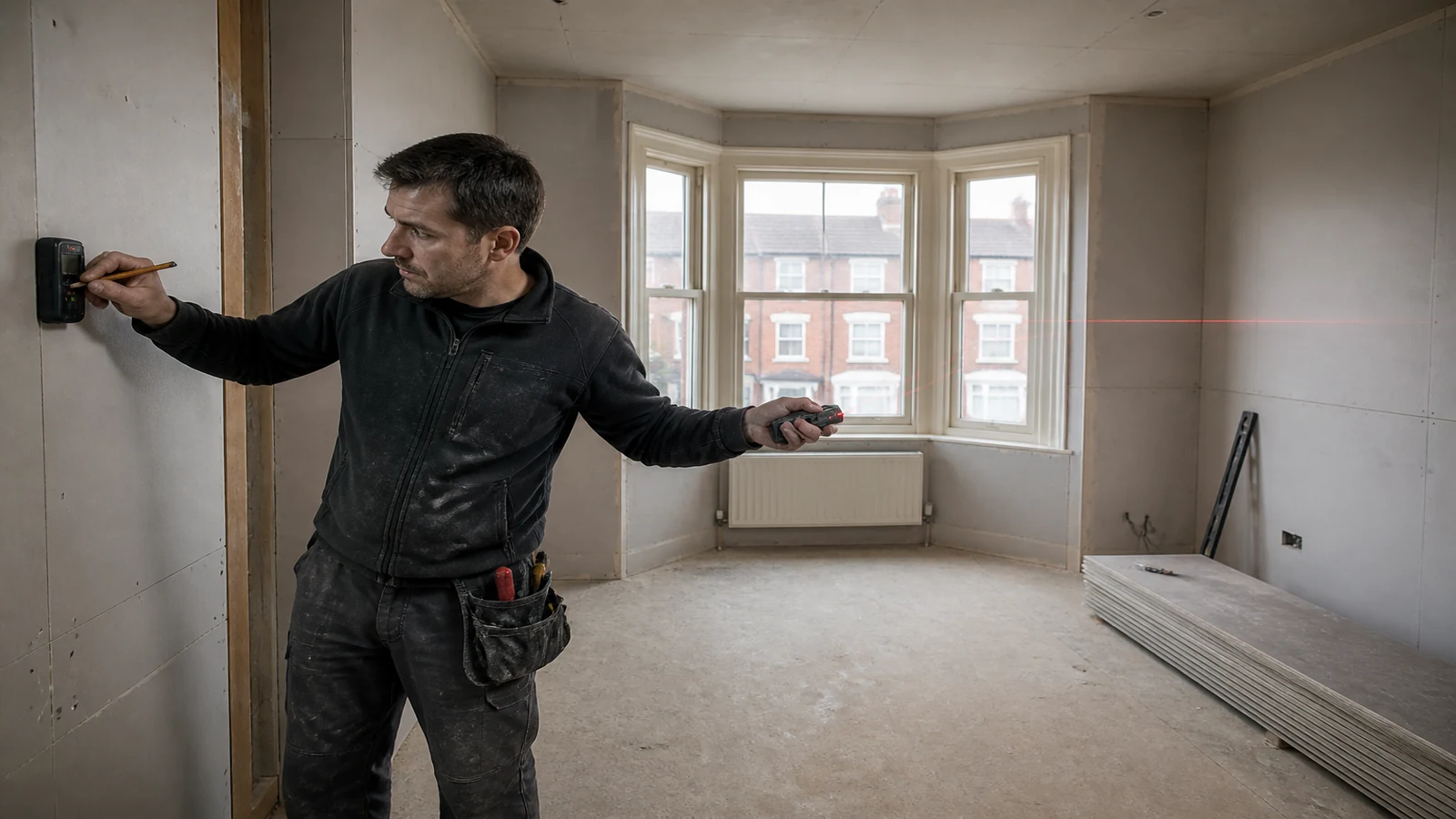
How to use a wall scanner then laser measure: UK scan-first SOP
How to use a wall scanner then laser measure is really an order-of-work question: clear the wall before you trust a span dimension. UK electricians, kitchen fitters and maintenance teams scan for concealed wood, metal and live AC, mark cautious zones, then switch to ranging for openings, unit runs and quote measurements. The SNDWAY SW-6100GT sold here combines both modes at £448.00.
Step 1 — Prepare the wall surface
Brush dust from the scan path, move loose fixings, and note foil-backed board or tile that may add noise. Stand at a consistent height and plan a slow pass along the fixing line—not a single point poke.
Step 2 — Scan and mark detections
- Select the wall-scan mode appropriate to the surface.
- Move steadily; pause when the unit alerts.
- Mark each alert with pencil or tape on the wall.
- Repeat perpendicular passes when a zone stays ambiguous.
- Record notes: date, room, and what you were fixing.
Alerts are decision-support. They do not replace isolation, competent electrical rules, or opening up when the wall history is unknown.
Step 3 — Switch to laser ranging
After the scan pass, change to distance mode for room width, opening height, or cabinet run length. Keep the same tool if you use a combined unit; otherwise swap tools deliberately so you do not skip the scan habit. The 120 m laser on the WallProbe listing is aimed at interior spans and layout—not at substituting a total station on open site.
Step 4 — Hand off measurements to the job
Write scan marks and laser dimensions on the same sketch. Fitters hanging units can transfer hang-line marks from the scan while using laser figures for end panels. Sparks quoting cable runs can pair cautious fixing points with measured distances to the consumer unit—still subject to site verification.
Common mistakes to avoid
Measuring first and scanning second reverses the safety story. Trusting one quiet beep on foil board, chasing on a green-light assumption, or copying depth figures from a rival brand brochure are all failure modes. For foil noise, see the foil-backed false positive guide. For kitchen hangs, see wall scanner before hanging kitchen wall units UK.
Review the listing if one tool should cover both steps
If scan-then-measure in one handheld fits your van, read the current specification on the SNDWAY SW-6100GT detail page.
Should I always scan before I laser-measure?
Yes when you plan to drill or fix into the wall—you want hazard context before you celebrate a clean dimension.
Does laser mode detect cables?
No. Ranging measures distance; scanning is the pre-drill check.
Can this SOP replace Part P checks?
No. Keep permits, isolation and competent trade practice in the workflow.